Transformadores
-
Proveedor: HARTLAND CONTROLS
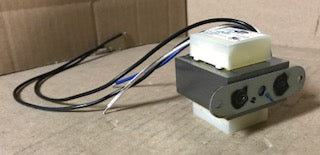
Transformador de 4 cables de 25 Va/montaje con patas, 600 voltios primario/120 V secundario
Número de serie: 186146 Disponible: 117Comprar ahoraPrecio regular $3.70Precio regularPrecio unitario / por$0.00Precio de venta $3.70 -
Proveedor: HARTLAND CONTROLS
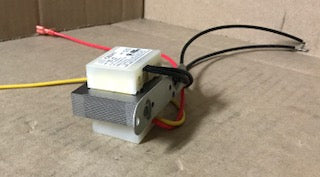
Cables para transformador de 30 Va, primario 240 V/12 V, secundario
Número de serie: 186136 Disponible: 423Comprar ahoraPrecio regular $4.22Precio regularPrecio unitario / por$0.00Precio de venta $4.22 -
Proveedor: HARTLAND CONTROLS
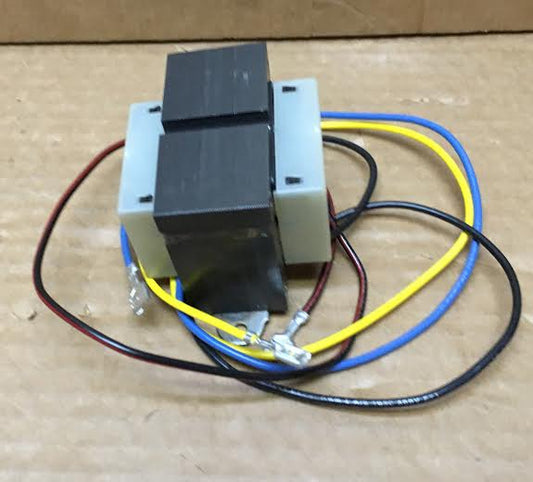
Transformador de 4 cables de 20 Va/montaje con patas, 240 voltios primario/24 V secundario
Número de serie: 186128 Disponible: 286Comprar ahoraPrecio regular $2.85Precio regularPrecio unitario / por$0.00Precio de venta $2.85 -
Proveedor: TYCO
Transformador de 4 cables de 50 Va, 575 primarios y 24 secundarios
Número de serie: 179962 Disponible: 278Comprar ahoraPrecio regular $10.00Precio regularPrecio unitario / por$0.00Precio de venta $10.00 -
Proveedor: HUNTINGTON
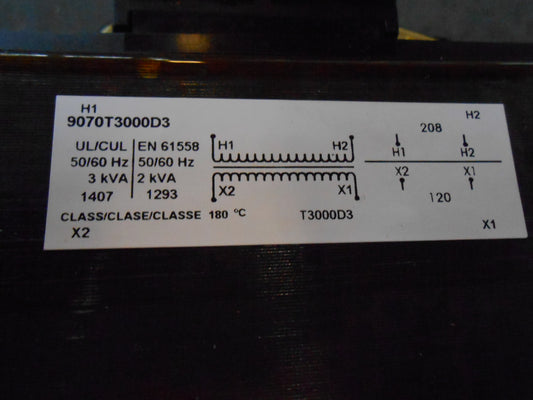
Transformador de control industrial 50/60Hz
Número de serie: 179961 Disponible: 15Comprar ahoraPrecio regular $104.98Precio regularPrecio unitario / por$305.00Precio de venta $104.98Venta -
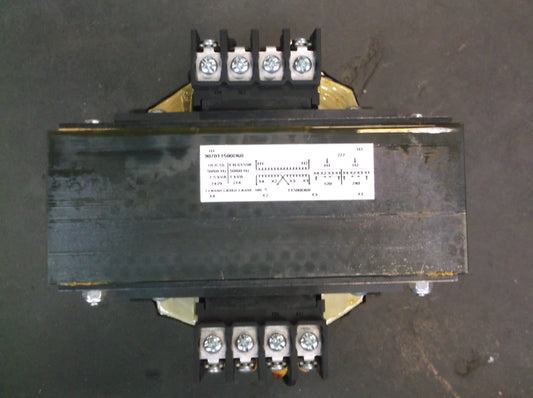
Proveedor: SQUARE D
Transformador de control industrial de 1500 VA, 277 V/s, 120-240 V
Número de serie: 179906 Disponible: 47Comprar ahoraPrecio regular $359.55Precio regularPrecio unitario / por$423.00Precio de venta $359.55Venta -
Proveedor: BASLER
Transformador de 380/415 voltios
Número de serie: 154754 Disponible: 1Comprar ahoraPrecio regular $9.50Precio regularPrecio unitario / por$22.00Precio de venta $9.50Venta -
Proveedor: GENERAL ELECTRIC
Transformador reductor de 0,250 kVA
Número de serie: 86577 Disponible: 2Comprar ahoraPrecio regular $44.42Precio regularPrecio unitario / por$47.00Precio de venta $44.42Venta -
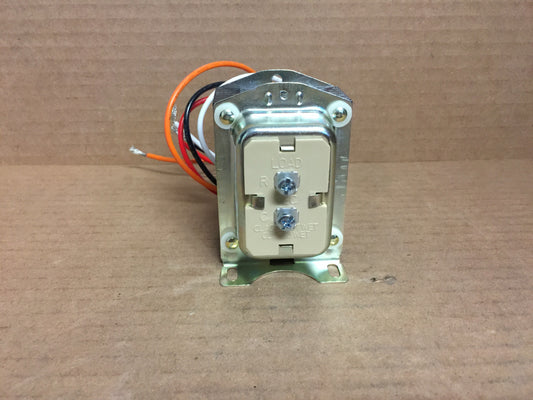
Proveedor: HONEYWELL
Transformador de circuito de control multimontaje H/W de 50 VA, 120/208/240 V, 50/60 Hz
Número de serie: 78891 Disponible: 6Comprar ahoraPrecio regular $22.00Precio regularPrecio unitario / por$0.00Precio de venta $22.00 -
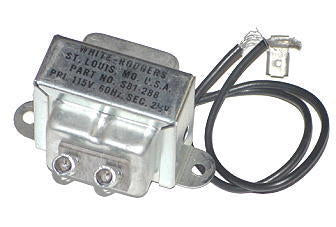
Proveedor: WHITE RODGERS
Transformador de 15 Va 115/60/1
Número de serie: 42799 Disponible: 1Comprar ahoraPrecio regular $7.56Precio regularPrecio unitario / por$11.00Precio de venta $7.56Venta
Frequently Asked Questions
An HVAC transformer steps down incoming line voltage, commonly 120 volts to 240 volts, to the 24-volt signal that powers the thermostat, control board, relays, and safety switches. Without a working 24-volt transformer, the low-voltage control circuit has no power at all, and the system cannot start even though line voltage is still reaching the equipment. Most residential and light commercial systems house the transformer inside the furnace or air handler cabinet, though some packaged or split systems mount it in the outdoor unit instead. The transformer sits between the high-voltage supply and the low-voltage components, so every part of the control circuit, from the thermostat wiring to the ignition control, depends on it working correctly.
VA, short for volt-amp, rating describes how much electrical load a transformer's secondary side can safely carry, and a replacement's VA rating needs to match or safely exceed the original rather than being chosen on voltage alone. That rating has to cover the combined draw of everything wired to the low-voltage side, including the thermostat, relays, and any added accessories such as a zoning board or a UV light. A transformer sized too small for that combined load tends to blow its internal fuse repeatedly or fail early, since it ends up carrying more current on a continuous basis than it was built to handle.
The clearest signs of a bad HVAC transformer include a blank or unresponsive thermostat display, a system that will not start at all, or a circuit breaker that trips repeatedly when the system tries to run. Loud humming, buzzing, or vibration coming from inside the furnace cabinet often points to a transformer under strain, especially if the noise is new or getting louder over time. Visible burn marks, a bulging case, or a burning smell near the transformer are more serious warning signs and usually mean the transformer has already failed or is close to it, rather than something that can wait for a routine service visit.
Matching a replacement transformer starts with comparing the primary, or input, voltage, the secondary, or output, voltage, and the VA rating against the transformer being replaced, rather than assuming transformers in a similar size range are interchangeable. The existing transformer's nameplate, stamped or printed directly on the unit, along with the system's wiring diagram, lists these specifications and is the most direct way to confirm them before ordering. When the old transformer is too damaged or corroded to read clearly, the part's model number or the system's original installation documentation provides the same information without requiring a guess at ratings.
Surplus HVAC parts are factory-new components that have never been installed in a system, typically sourced from discontinued product runs, order overages, or excess manufacturer inventory rather than from a job site or a returned unit. That sets them apart from used parts, which have already operated inside a system, and from refurbished parts, which have been repaired or reconditioned after prior use. Surplus City sources its transformers as new, unused overstock, so a transformer purchased from this collection has the same manufacturing condition as one bought at full price through a standard distributor. The lower price reflects how the inventory was acquired, not the age or condition of the part itself.
An HVAC transformer commonly lasts in the 10 to 20 year range under normal conditions, with the wide spread reflecting differences in electrical load, installation quality, and exposure to power surges or moisture. Power surges, chronic overloading from added accessories, and wiring shorts on the secondary side are the most frequent causes of early failure, often cutting that lifespan well short of the upper end of the range. Keeping the connected load within the transformer's VA rating and protecting the circuit from surges are the most direct ways to get a full service life out of the part before replacement becomes necessary.
Transformer pricing varies by voltage, VA rating, and brand, so there is no single figure that applies across every model. What stays consistent is that buying new overstock inventory typically costs less than buying the same new part through a standard HVAC distributor, since the savings reflect how Surplus City acquires its inventory rather than a difference in part quality. For current HVAC transformer replacement cost figures on a specific model, the listed pricing on the HVAC transformers collection page reflects what is available today, since overstock pricing shifts as inventory turns over.
Surplus City offers an optional 30-day startup warranty on select equipment categories, and whether that coverage extends to transformers has not yet been confirmed. Buyers should treat warranty status for this category as unconfirmed rather than assuming coverage applies or does not apply, and should confirm directly with Surplus City for the current warranty terms on a specific transformer before completing a purchase.
Replacing an HVAC transformer means working on the live, high-voltage primary side of the circuit, since the transformer sits at the point where line voltage steps down to the 24-volt control circuit, and that carries a real risk of serious electrical shock. This is not a task suited to a casual DIY repair. A licensed HVAC technician or electrician has the training and equipment to de-energize the circuit safely, confirm the correct voltage and VA rating before installation, and verify the new transformer is wired and grounded correctly before restoring power. Attempting this work without that training risks electrical shock, damage to the control board, or a wiring error that leaves the system unsafe to operate.